
Closed loop systems
Chilled water system treatment.
Corrosion inhibition, microbial control and routine monitoring for closed chilled water loops, using Kurita Cetamine® programmes with flushing when a loop needs a reset.
- Programme
- Kurita Cetamine®
- Systems
- Closed chilled water loops
- Monitoring
- Monthly testing
- Also
- Chiller tube flushing
Little make-up water does not mean little risk.
A closed chilled water loop circulates the same water between the chillers and the air handling units or process equipment. It loses very little water, so problems build slowly and out of sight.
Corrosion of steel and copper releases iron and copper into the water and forms sludge that blocks strainers, coils and control valves. Bacteria grow in low-flow and dead-leg sections and cause biofilm and corrosion underneath it. A loop that is not monitored often shows the problem first as poor cooling in one zone or a failed valve.
Treatment keeps a protective inhibitor level in the water, keeps bacteria down and catches leaks early through make-up and corrosion readings.
Closed loop and chiller water treatment.
For chilled water, process chilled water and other closed loops.
| Systems | Chilled water, process chilled water, closed loops |
|---|---|
| Programme | Kurita Cetamine® |
| Visits | Monthly or as agreed |
| Reporting | Written report each visit |
- Initial analysis of the loop water to check its condition
- Kurita Cetamine® programmes for corrosion inhibition across mixed metals
- Microbial control for closed loops
- Monthly monitoring of inhibitor level, pH, conductivity and corrosion markers
- Flushing of dirty loops and new installations before treatment starts
- Written report after every visit
Your loop water is discoloured, strainers keep blocking, a zone has lost cooling or nobody has tested the loop in a while.
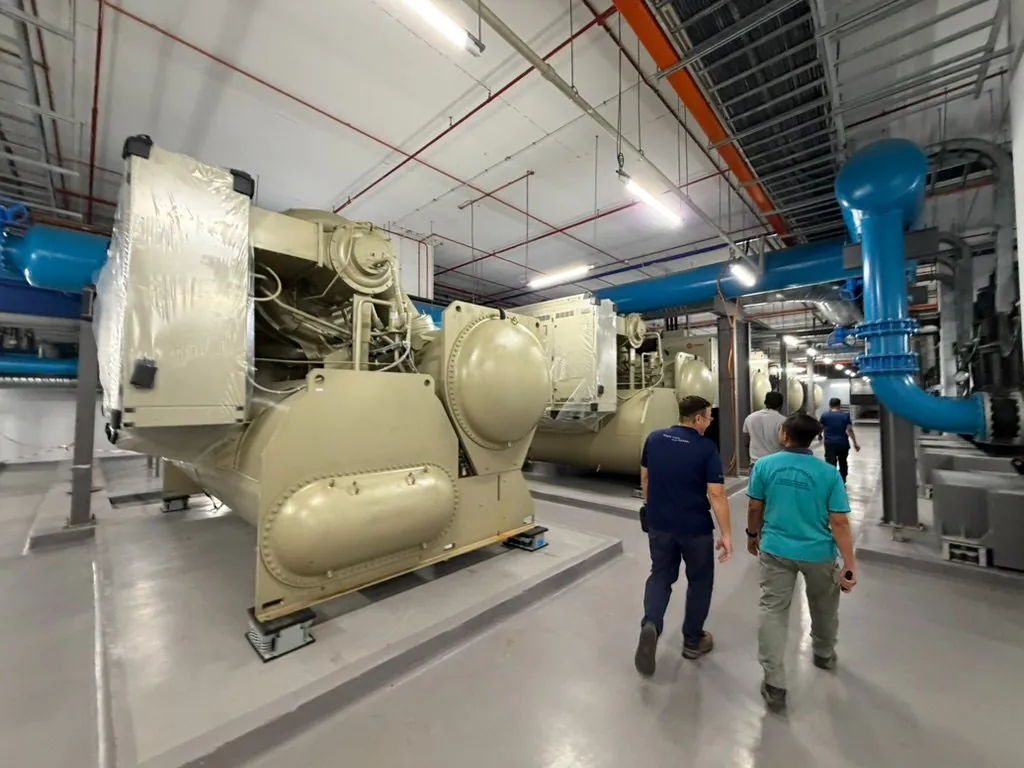
Chiller water treatment covers both sides.
The chilled water loop is only half of a chiller. The condenser side runs through the cooling tower and is where scale and biofilm hit efficiency hardest. We treat both and offer condenser loop flushing when approach temperature has already climbed.
In one semiconductor fab we restored average condenser approach from 3.6 °C to 0.5 °C across three chillers. Read the case study.
Related services.
Cooling tower chemical treatment
Scale and corrosion inhibitors, oxidising and non-oxidising biocides and Legionella control.
Learn more →02Process cooling water treatment
Industrial cooling towers and process chilled water loops under variable load.
Learn more →03Semiconductor PCW treatment
Process cooling water and chiller plant care for fabs and assembly plants.
Learn more →04Cooling tower maintenance
Monthly servicing, physical cleaning and Legionella control for cooling towers across Malaysia.
Learn more →Chilled water treatment: common questions.
What is a closed loop chilled water system?
A closed loop circulates the same water between the chillers and the air handling units or process equipment, with very little make-up. Because the water is not exposed to air like a cooling tower, the risks are different: corrosion of steel and copper, sludge from corrosion products and bacteria that thrive in low-flow sections.
How often should a closed loop be tested?
Monthly testing is typical for most closed loops. We check inhibitor level, pH, conductivity and iron and copper levels for signs of corrosion and look for bacteria. Any sudden rise in make-up water is a warning sign of a leak and is investigated straight away.
What is a Cetamine® programme?
Cetamine® is a Kurita water treatment technology based on film-forming amines. It forms a thin protective film on metal surfaces in the loop, which limits corrosion across mixed-metal systems. We combine it with microbial control and routine monitoring for closed chilled water loops.
What is condenser approach temperature and why does it matter?
Approach temperature is the difference between the refrigerant condensing temperature and the condenser water leaving temperature. A clean condenser has a low approach. Scale, sludge and biofilm in the tubes push it up, so the compressor works harder. Each 1 °C rise in condensing temperature adds roughly 2–3% to compressor energy.
How do you price water treatment?
Every site is quoted individually after readings, because the programme depends on your water, your equipment and your load. We start with a site survey and water analysis and send a written proposal.